From director Clint Eastwood comes "American Sniper," starring Bradley
Cooper as Chris Kyle, the most lethal sniper in U.S. military history.
But there was much more to this true American hero than his skill with a
rifle. U.S. Navy SEAL sniper Chris Kyle is sent to Iraq with only one
mission: to protect his brothers-in-arms. His pinpoint accuracy saves
countless lives on the battlefield and, as stories of his courageous
exploits spread, he earns the nickname "Legend." However, his reputation
is
also growing
behind enemy lines, putting a price on his head and making him a prime
target of insurgents. Despite the danger, as well as the toll on his
family at home, Chris serves through four harrowing tours of duty in
Iraq, becoming emblematic of the SEAL creed to "leave no man behind."
But upon returning home, Chris finds that it is the war he can't leave
behind. (C) Warner Bros.
Rating:
R (for strong and disturbing war violence, and language throughout including some sexual references)
Jamie Dornan was an American chat show virgin before his appearance on The Tonight Show Starring Jimmy Fallon on Monday, Feb. 9 — so Fallon made sure to give him a night to remember!
And for Dornan, 32, it was time for a bit of verbal dexterity as he was
tasked with reading out — mainly clean — lines from the saucy S&M
best-selling book, but in a range of different accents.
The game, entitled Fifty Shades of Accents, began with a
challenge for Dornan. He had to read out the phrase, "I don't remember
reading about nipple clamps in the Bible," with his best Scottish
delivery.
Ted 2 is an upcoming American comedy film directed by Seth MacFarlane and written by MacFarlane, Alec Sulkin, and Wellesley Wild. It is the sequel to MacFarlane's 2012 film Ted. The film stars MacFarlane as the title character, along with Mark Wahlberg and Amanda Seyfried. The film is scheduled to be released on June 26, 2015 by Universal Pictures.
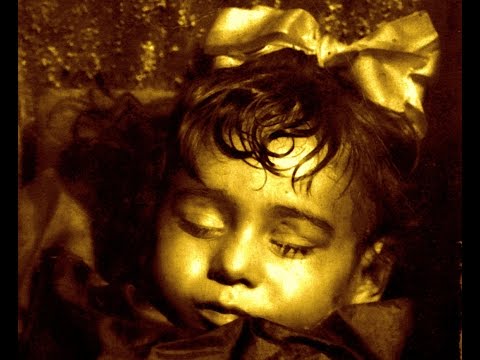
Ifyoudo notknow the origin ofthe bodies oflittle girl,youwillsay shedieda fewdaysago. You need to know, thislittle girlis namedRosaliaLombardodiedin 1920at the age of2yearsbecause ofpneumonia. Rosalia's father, OfficialMarioLombardo, it wasverysadfor his death, his bodywas embalmedbyAlfredoSalafia, put ina glass coffin, andplacedintheCapuchinCatacombsinPalermo, Italy.
Notmuch is knownabout thelife ofRosalia, and, until now,not much isknewabouttheSalafiapreservationmethods.
Embalming as a means of memorializing the dead has ancient roots, dating all the way back to the Egyptians beginning in 3200 BC.
During this period, embalmers removed the internal organs before
rinsing the empty cavity with palm wine and filling it with natron
salts. Over the next 40 days, the body would begin to dry out and
mummify. The internal organs—which were washed, coated with resin and
wrapped in linen strips upon removal—were either placed back into the
body’s cavity at the end of this process, or stored in canopic jars.
This method is very different from the
one used today, in which preserving fluids are pumped through the
corpse’s vascular system. The end result is very different as well.
Instead of a dried-out mummy that bears little resemblance to the
living, you get a corpse that looks more or less as if it is sleeping.
Vascular embalming became popular in the mid-19th century,
and was largely driven by the sentimental desire to return the bodies of
dead soldiers to their hometowns for burial during the American Civil
War.
Rosalia open her eyes
Embalming techniques varied greatly in the late-19th and early-20th centuries. For many years, Salafia’s formula remained a mystery. That was until Dario Piombino-Mascali
at the Institute of Mummies and the Iceman in Bolzano tracked down
Salafia’s living relatives who had in their possession a number of the
embalmer’s handwritten papers. In his notes, Salafia revealed that he
injected little Rosalia with a mixture of formalin, zinc salts, alcohol,
salicylic acid and glycerin. It was the latter which prevented the
little girl’s body from drying out too much. It was the zinc salts which
gave her corpse its rigidity and stopped her cheeks and nasal cavity
from caving in.
Little “Sleeping Beauty” draws thousands
of people to the Capuchin Catacombs each year. Visitors armed with
cameras and iPhones each vie to get a shot of her lying in her glass
coffin. But for me, Rosalia is an unsettling sight. She is a reminder of
the dangers of childhood in a pre-penicillin era, and represents her family’s unwillingness to let go of her even in death.
In her defiance to decay, Rosalia Lombardo has become Death’s doll, an eternal playmate that can neither age nor disappear.
Nearly 100 years after her death, Rosalia looks unnervingly alive. In
2009, an MRI of Rosalia’s corpse produced the first 3D image of the
little girl and revealed that all her organs were perfectly intact.
Moreover, in time-lapse photos, Rosalia’s eyes open and shut, showing
her blue irises to be nearly undamaged by decomposition (video below).
The eyelid movement is most likely caused by changes in room temperature
and humidity down in the catacombs, yet it has fueled many cult beliefs
that Rosalia’s spirit returns to the body.